
THE KYAKUYASHIKI / TAKETA
Rooms that welcomed travelers.
Now filled with the aroma of coffee.
The Kyakuyashiki Kyakuyashiki
Once the Oka domain’s guest residence. Now a coffee roastery and cafe.
Step into a story more than two centuries in the making.
A HOUSE THAT WELCOMED TRAVELERS
Take in the history.
Make yourself at home.
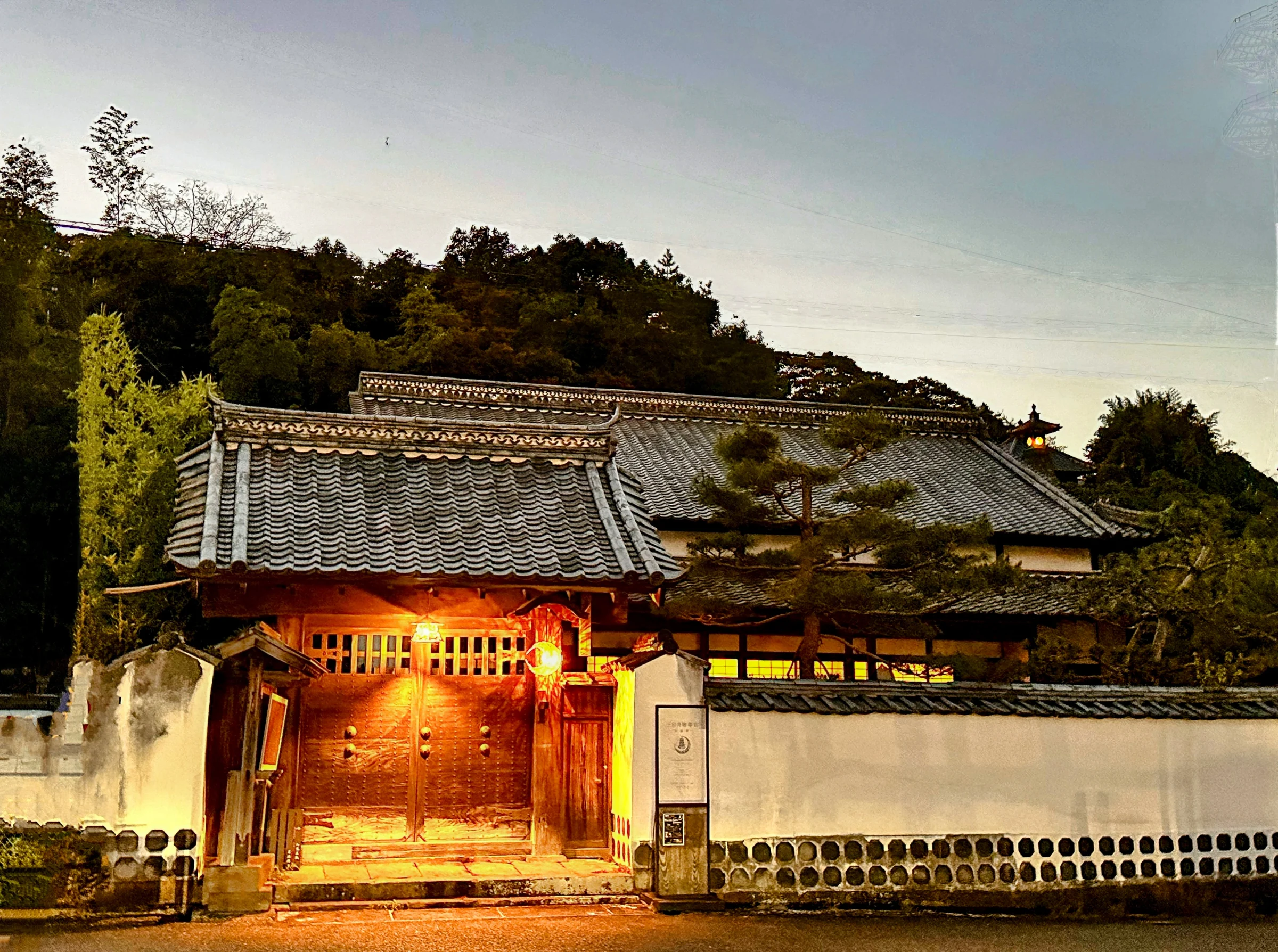
The Kyakuyashiki was the Oka domain’s guest residence, offering accommodation to envoys from other domains and visiting dignitaries. Also known as the “envoys’ house,” it served much like an official guesthouse today.
The residence was rebuilt after a fire in 1806, the third year of the Bunka era. Its eastern section, based on the original Edo-period structure, survives today.
Old wooden pillars, the texture of tatami, light filtering through paper screens. Mikazuki Coffee Roastery Gesshouro sits within this living history. Settle in, look out over the garden, and enjoy a little time of your own.
A JOURNEY MEASURED IN STARS & STEPS
The journey that mapped Japan
also led to this room.
In 1800, a surveying journey began.
Just over a decade later, Ino Tadataka arrived at the guest residence in Taketa.
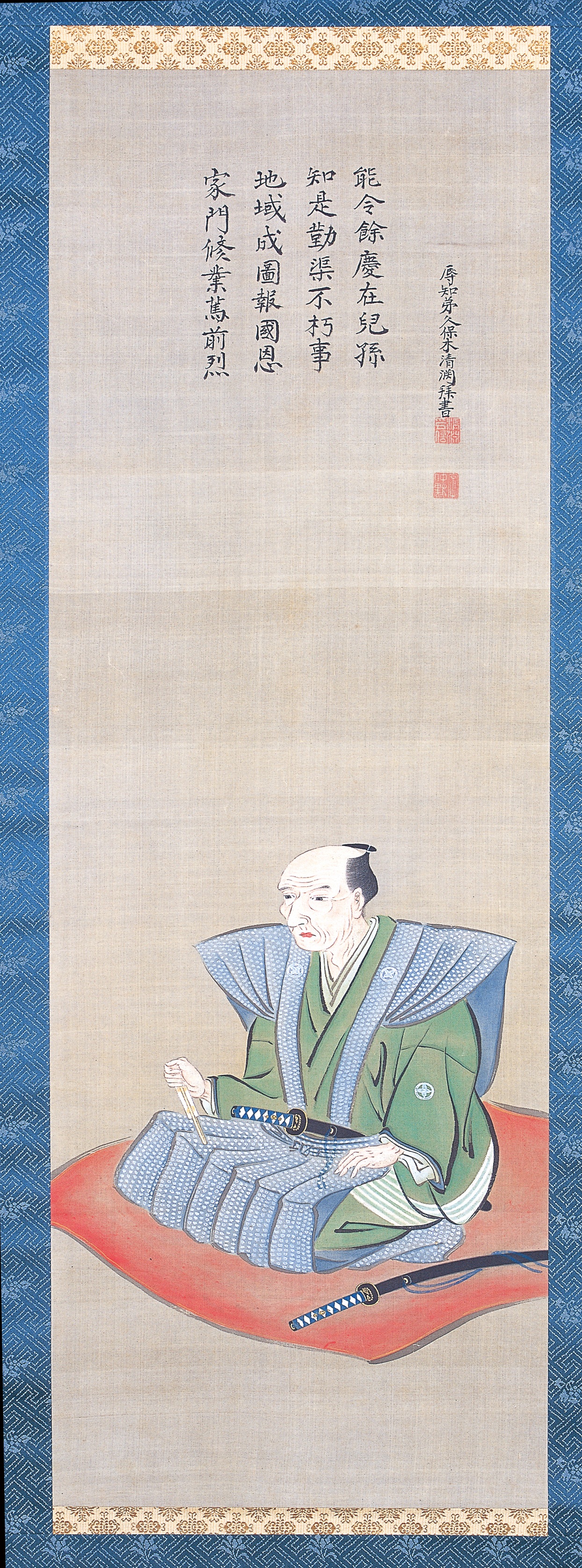
Ino Tadataka
INŌ TADATAKA1800
01 / EDO
The journey begins in Edo.
The beginning of a long journey to map Japan. Tadataka left Edo on his first surveying expedition, traveling through Tohoku to Ezo, now Hokkaido.
The starting point of his surveying journeys.
Select a period to follow the expanding scope of his journeys. This schematic map shows the regions surveyed on successive expeditions. Lines connect the regions, rather than trace the actual routes. Return journeys and detailed itineraries are omitted.
WINTER, 1811 / THE KYAKUYASHIKI
On a long journey,
a place to rest.
Tadataka came to Taketa during his seventh surveying expedition, his first to Kyushu. It was the end of Bunka 7 on the traditional calendar: January 1811 in the Gregorian calendar.
More than a decade after his surveys began, this traveler who observed the stars and measured the land paused to rest here. Knowing that lends a different light to these familiar rooms.
Local tradition holds that Tadataka slept in the rear room, now called the New Moon Room. While you wait for your coffee, take a moment to imagine the traveler who once stayed here.
Dates, length of stay, and historical sources
Taketa City’s heritage description records a stay of 23 days from the 18th day of the 12th month of Bunka 7 (1810). A lodging list based on the survey diaries, however, records a stay at the guesthouse in Oka’s castle town from the 19th to the 23rd of that lunar month. The sources differ; please consult both accounts when considering the length of his stay.
The 19th–23rd days of the 12th month of Bunka 7 on the traditional calendar correspond to January 13–17, 1811. “1811.01” on the map uses the modern calendar. The account of the New Moon Room is presented as a tradition associated with the building.
Taketa City: Kyakuyashiki, a City Historic Site ↗Digital Ino Maps: Lodging Locations in Oita Prefecture ↗National Astronomical Observatory of Japan: Calendar Database ↗THE GARDEN, THROUGH THE YEAR
The seasons unfold
beyond the windows.
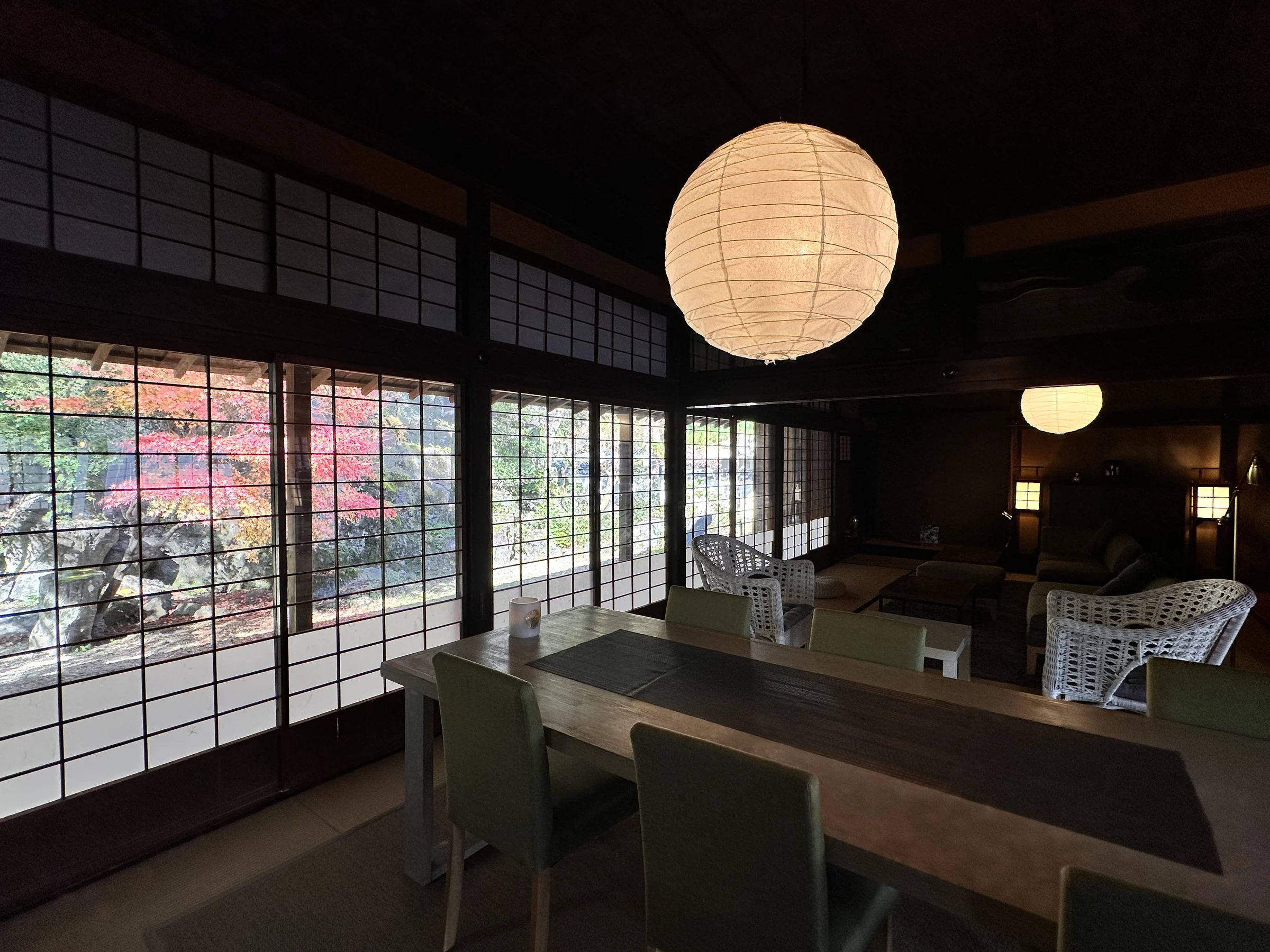
Light through fresh leaves. The deep red of autumn.
The same room, a different season.
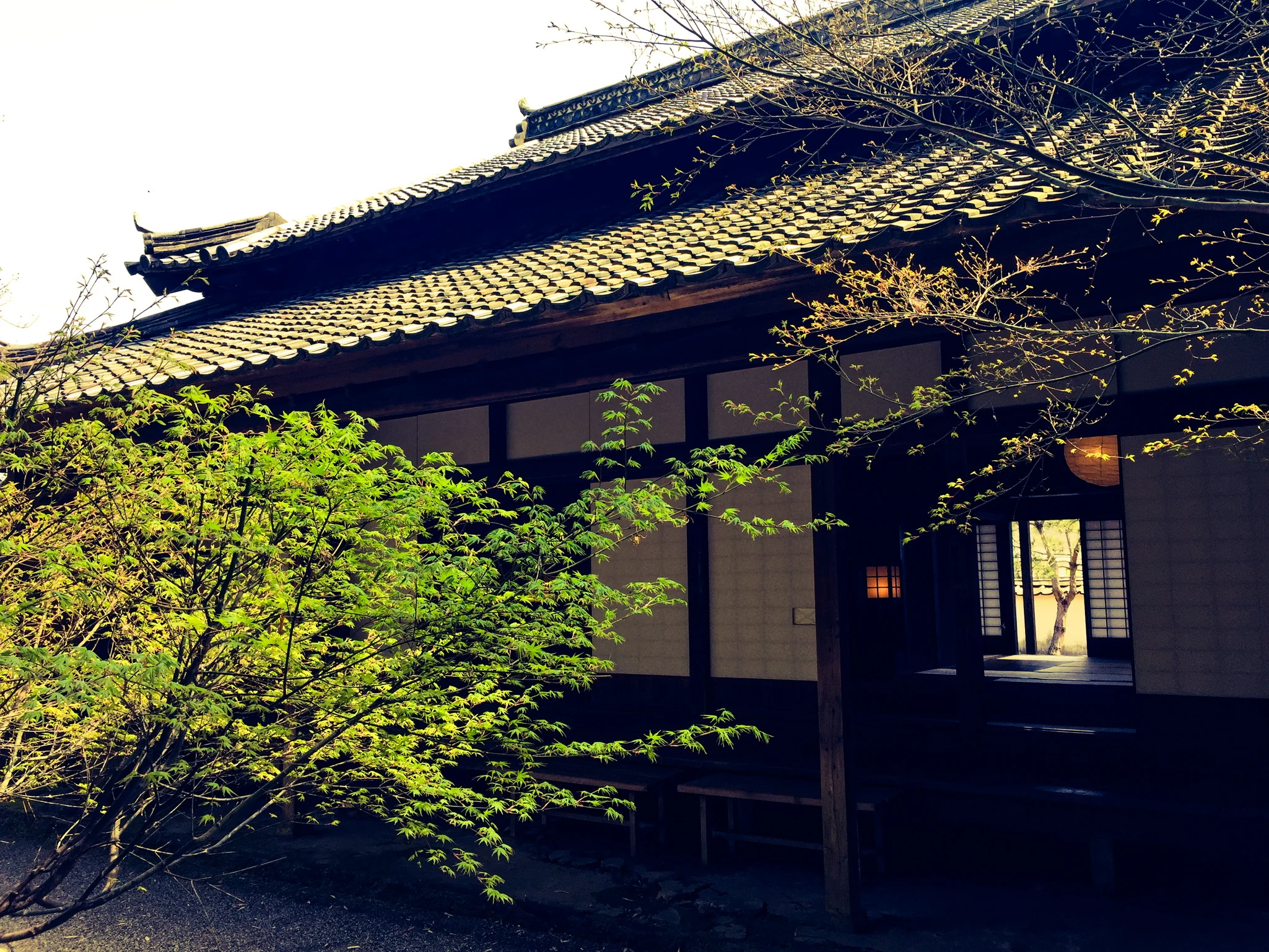
LIGHT THROUGH LEAVES
Breathe in
the green.
Layers of leaves, with light and shadow slowly shifting through the garden. Sit on the veranda and let your feet rest after a walk through the castle town.
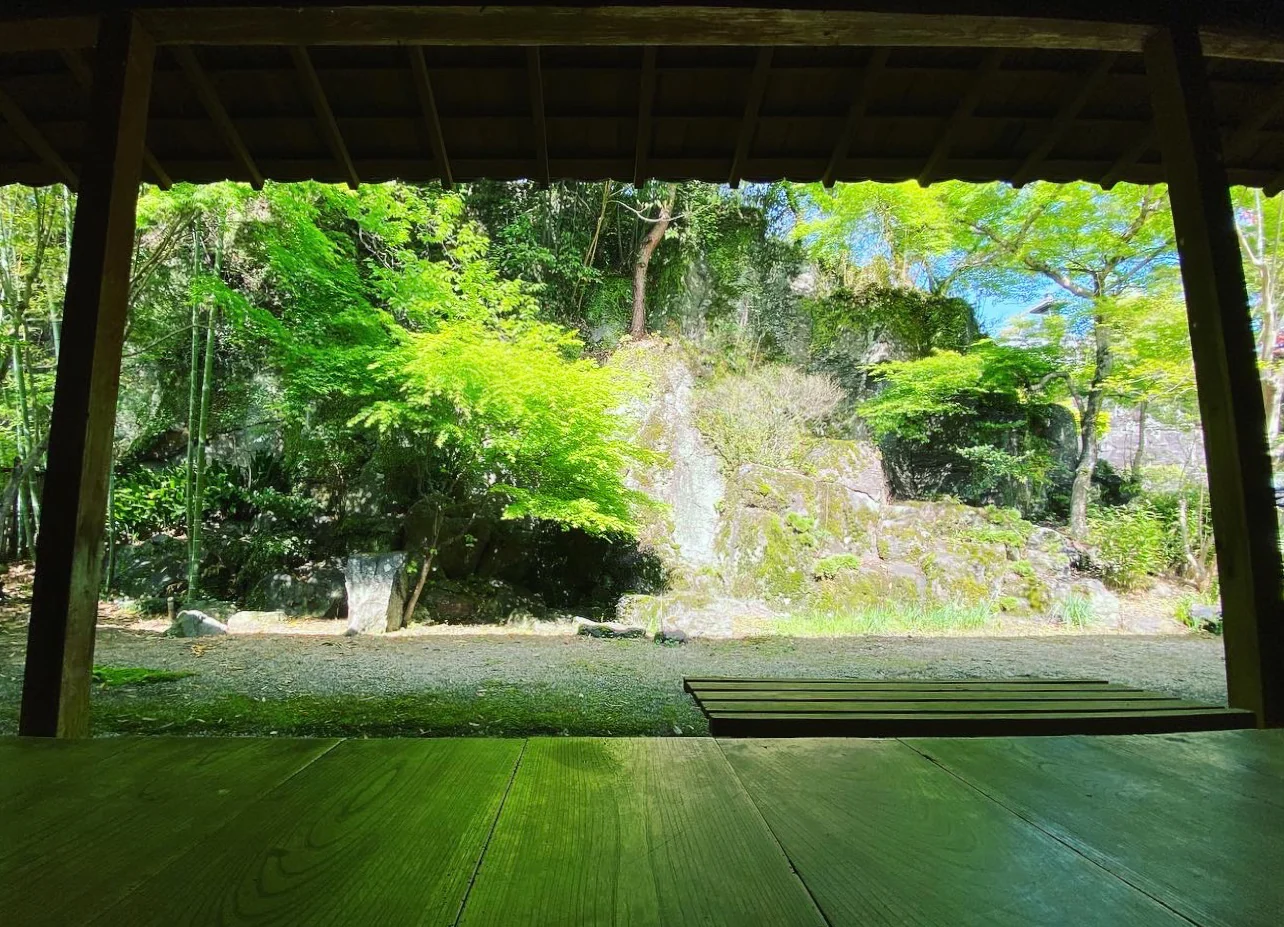
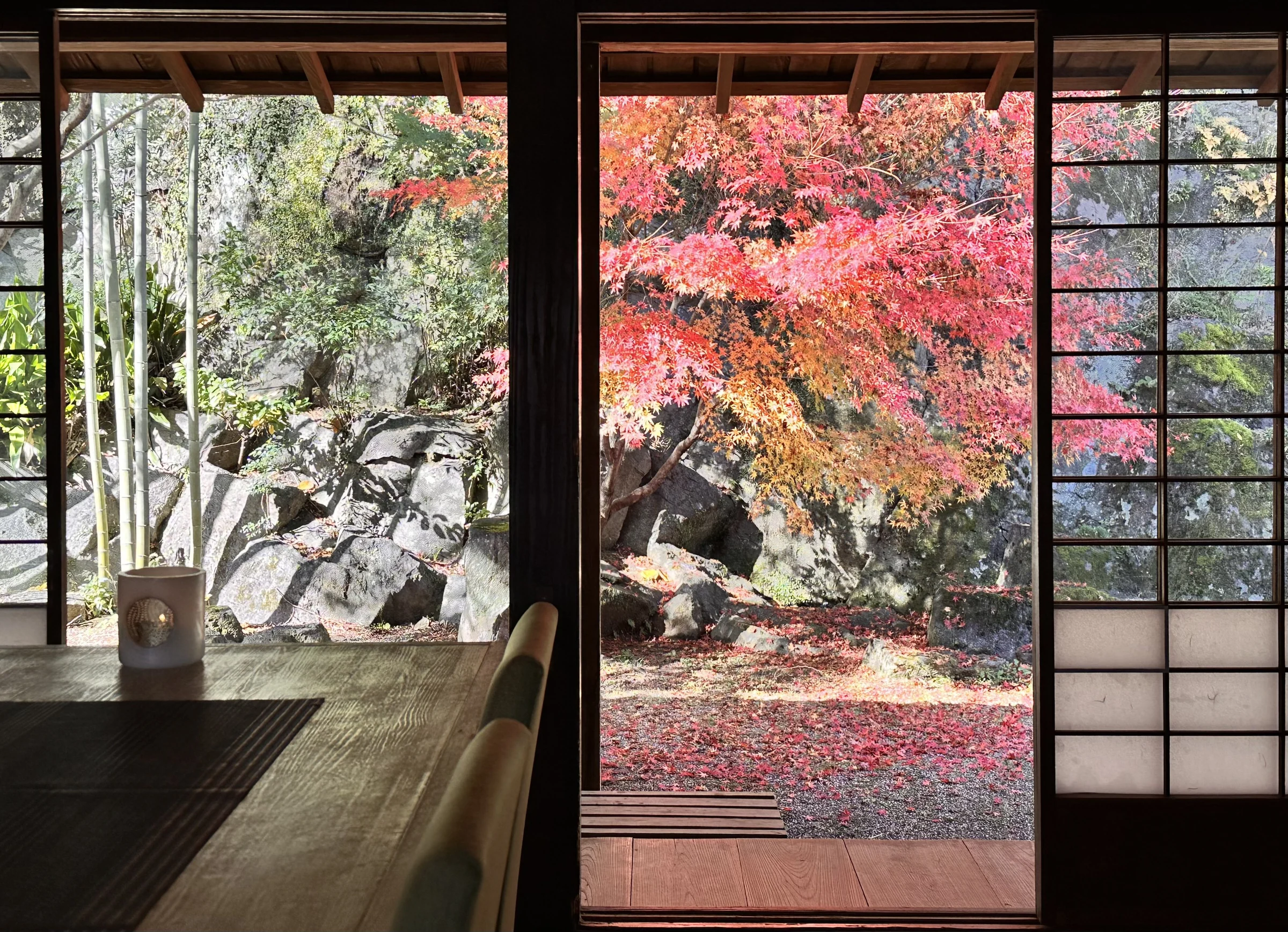
A WINDOW INTO AUTUMN
A window
onto autumn.
The red beyond the windows meets the tones of old wood and the shadows on tatami. With a steaming cup in hand, this is a season that invites you to linger.
These seasonal views were photographed by the owner.
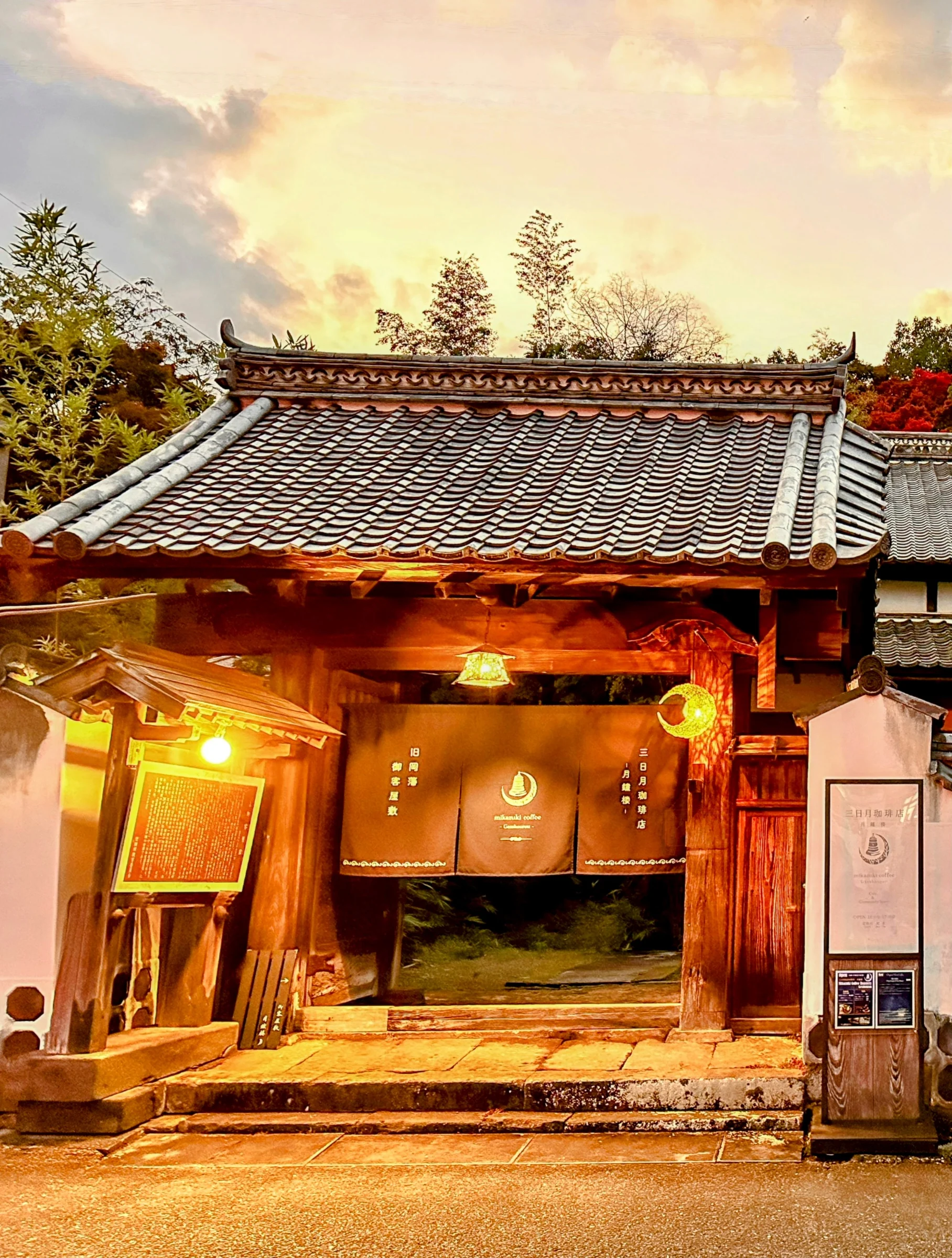
THE HOUSE AT DUSK
A light
to welcome travelers.
White walls, tiled roofs, and warm light spilling from the gate. Through changing times, welcoming people has remained at the heart of this residence.
The photograph shows the building at dusk. Current opening hours are 11:00–17:00.
The garden follows the dry-landscape style, borrowing views of Kannonji Temple’s Tomi Lantern and Mount Hachiman to create a quiet sense of depth.
THE HOUSE THROUGH TIME
A place of welcome,
through the centuries.
- 1668
A new home in Teramachi.
After a major fire, the guest residence was built on this site.
- 1806
Rebuilt after the fire.
In 1806, the third year of Bunka, the residence welcomed guests once more. Its eastern section, based on the Edo-period building, remains.
- 1811
Ino Tadataka stays here.
At the end of Bunka 7 on the traditional calendar, he visited the guest residence during his surveys of Kyushu.
- 1891
A clinic for the town.
During the Meiji era, the building became a clinic, taking on a new role in the everyday life of the town.
- 1972
Recognized as a historic site.
Designated a city historic site, the property came into Taketa City’s ownership in 1984.
- 1985–86
Preserved for the years ahead.
Conservation and restoration have carried the residence into the present. Open to visitors and still in use, it continues its story.
- TODAY
Over a cup of coffee.
Mikazuki Coffee Roastery Gesshouro. We look forward to welcoming you here.

YOUR JOURNEY, OUR HOUSE
To the next traveler
through this gate.
After a walk around Oka Castle. On your way through the castle town.
Let a moment of your day become part of this continuing story.
Sources and photographs
The history of the building and garden draws on information from Taketa City’s Cultural Properties Division. Survey dates are based on timelines and materials from the Ino Tadataka Museum. Building and garden photographs are by the owner of Mikazuki Coffee Roastery. The portrait is Aoki Katsujiro’s Portrait of Ino Tadataka, held by the Ino Tadataka Museum; the figure is shown as a detail.
Taketa City: Kyakuyashiki, a City Historic Site ↗Ino Tadataka Museum: The Life of Ino Tadataka ↗Ino Tadataka Museum Newsletter, No. 16 ↗Portrait of Ino Tadataka (Wikimedia Commons / Public domain) ↗Map: Natural Earth / Public domain ↗